

I’ve been thinking quite a bit about the direction of college athletics, particularly with everything happening around NIL, revenue sharing, and the transfer portal.
And the more I look at it, the more I think there’s a lesson worth taking from Paris Saint-Germain.
For years, PSG had virtually everything you would associate with a successful sports organization. Financial resources, global exposure, commercial partnerships, and some of the biggest names in football.
At one point, they had Messi, Neymar, and Mbappé playing together.
Think about that for a second.
Three of the most recognizable players in the world, all on the same roster. From a commercial standpoint, you could certainly understand the strategy. The attention, sponsorship opportunities, global reach, and overall brand value were enormous.
But the one thing they were ultimately trying to accomplish continued to elude them.
Winning the Champions League.
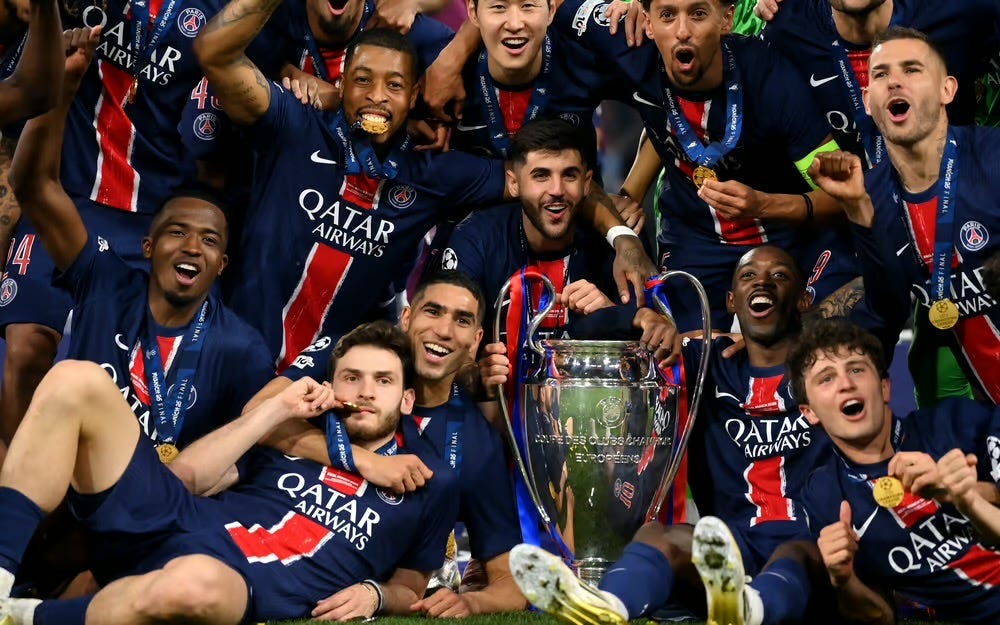
Fast-forward to 2025, and PSG finally accomplished that goal. Not with Messi, Neymar, or Mbappé, but with a different group of players operating within a much more cohesive system.
What stood out to me wasn’t necessarily that those players had moved on. It’s what PSG seemed to have learned in the process.
They didn’t stop investing in talent. They changed how they approached building a team.
And I think that’s where American universities should be paying attention.
Are We Building Programs or Just Buying Players?
I don’t have an issue with athletes being compensated. Quite the opposite. For years, athletes helped generate enormous value for their universities without having the same opportunities to participate financially.
That part of the evolution was necessary.
But I do question whether some institutions are becoming so focused on acquiring talent that they’re losing sight of what actually makes a successful program.
We’re seeing significant resources committed to individual athletes, with programs constantly trying to position themselves to win the next recruiting battle or secure the next transfer.
And while that may improve a roster on paper, it doesn’t necessarily improve the organization.
PSG learned that the hard way.
You can have the most talented individuals in the world, but if the pieces don’t complement one another, or the organization lacks a clear identity, the return on that investment can be disappointing.
College athletics isn’t any different in that regard.
There’s a difference between putting together a collection of talented players and building a program where those players can actually develop and succeed together.
What PSG Eventually Figured Out
What I appreciate about PSG’s evolution is that they didn’t abandon ambition.
They still wanted elite players. They still wanted to compete at the highest level. And they certainly weren’t operating on a small budget.
But there appeared to be a greater emphasis on finding players who fit what they were trying to build.
Under Luis Enrique, you saw a team that played with a collective identity. Young players were trusted with meaningful responsibilities. Established players had to operate within the same system.
No one player was bigger than the approach.
And ultimately, that approach delivered something the previous model hadn’t.
For universities, I think the takeaway is pretty straightforward.
Before you start spending significant money on talent, you should have a clear understanding of the type of program you’re trying to build.
What is your identity?
What type of athletes fit your environment?
What are you doing to develop the players already in your program?
And how much of your success is dependent on continuously bringing in someone new?
Those are questions I’d be asking before committing millions of dollars to a roster.
Player Development Still Has to Matter
This is probably the part of the conversation I find most interesting.
With the transfer portal and the financial incentives now available, it’s becoming increasingly attractive for universities to acquire players who can contribute immediately.
I understand why.
Coaches are under pressure to win, athletic departments are under pressure to generate revenue, and the expectations from alumni, donors, and university leadership aren’t getting any smaller.
But what happens when the incentive to acquire talent starts to outweigh the incentive to develop it?
Development has always been one of the fundamental responsibilities of college athletics.
And I’m not talking strictly about what happens on the field.
I’m talking about the investment in coaching, sports science, medical care, financial education, professional development, and creating an environment that prepares athletes for what comes after their playing careers.
To me, those investments should become more important as athletes begin earning more money, not less.
There’s also something to be said about continuity.
When you’ve invested in developing an athlete over several years, you have a much better understanding of that individual’s strengths, limitations, personality, and how they fit into the broader team.
You can’t always buy that level of familiarity.
And you certainly can’t assume it develops overnight.
There’s a Bigger Business Conversation Here
One thing I think gets overlooked in all of this is how universities are evaluating the financial and operational risks associated with this new model.
We’re seeing athletic departments make increasingly significant financial commitments, but how are those commitments being evaluated beyond the immediate competitive benefit?
What happens when an athlete gets injured?
What happens when a significant portion of your roster turns over?
How are you evaluating the long-term sustainability of those commitments?
And what happens when the financial investment doesn’t produce the expected outcome?
These are the types of questions that businesses operating in other industries have to consider every day.
College athletics should be no different.
I’m not suggesting universities should operate exactly like professional football clubs. Their academic responsibilities, institutional missions, and relationships with student-athletes make the environment fundamentally different.
But if we’re going to embrace the economics of professional sports, there are lessons to be learned from how professional organizations allocate capital, develop talent, manage risk, and build for the future.
Especially from organizations that have already made some very expensive mistakes.
The Lesson From Paris
PSG didn’t suddenly become successful because they discovered some secret formula.
They had resources all along.
What changed was how those resources were organized around a broader strategy.
And that’s what I think universities need to take seriously.
There’s nothing wrong with investing heavily in talent. In today’s environment, that investment is going to be necessary for programs that want to compete at the highest level.
But the institutions that figure out how to connect recruitment, development, culture, financial discipline, and long-term planning are going to put themselves in a much stronger position.
Not just for one season, but over time.
PSG spent years proving that having the biggest names doesn’t necessarily mean you have the best team.
College athletics doesn’t need to spend the next decade learning that same lesson.